
Is summer a good time to visit Japan from the UK?
Information based on publicly available hotel listings and booking platform research as of May 2026. Prices are indicative and subject to change. Always verify current rates before booking. Full disclaimers below ↓
Editorial note: This guide was produced by the GlobalStay editorial team to help UK travellers find the right hotels for a Japan summer holiday. GlobalStay is a hotel booking service — we source accommodation in Japan and worldwide destinations for UK families, couples, and groups. We do not sell flight-inclusive packages. Request a Japan hotel quote here.
Best cities: Tokyo, Osaka, Kyoto — all covered in this guide.
Budget hotel prices: From £40 per room per night in Tokyo.
Mid-range (3–4 star): £70–£190 per night depending on city and location.
Luxury (5 star): From £280 per night in Tokyo, from £300 in Kyoto.
Best area for families: Shinjuku (Tokyo), Umeda (Osaka), near Kyoto Station.
Rainy season: Mid-June to approximately 20 July — plan indoor days.
Book by: As soon as possible for July–August — peak school holiday demand.
Japan has quietly become one of the most searched long-haul destinations for UK families, couples, and solo travellers. Summer 2026 searches from the UK are up significantly on 2024 levels, and for good reason: the pound is performing well against the yen, direct British Airways and Japan Airlines flights from Heathrow have expanded capacity, and Japan lifted all COVID entry restrictions years ago.
What most UK travellers still get wrong is the hotel decision. They either overspend on a five-star Tokyo tower they barely use, or they book budget accommodation two train stops outside the city and spend half their holiday commuting. This guide fixes that. You will know exactly where to stay, what to pay, and when to book before you leave this page.
Is summer a good time to visit Japan from the UK?
The honest answer is yes — with conditions. Japan in July and August is hot and humid, with temperatures regularly hitting 33–36°C in Tokyo and Osaka. That puts off some travellers, and that is precisely why it works. Hotel rates across Japan drop by 15–30% compared to cherry blossom season in April, and the famous destinations — Kyoto’s Arashiyama bamboo grove, Hiroshima, Nikko — are significantly less crowded than they are in spring or autumn.
UK school holidays align almost perfectly with Japan’s summer festival calendar. Gion Matsuri in Kyoto runs throughout July, with the grand procession on 17 July. The Sumida River Fireworks Festival in Tokyo takes place on the last Saturday of July. Osaka Tenjin Matsuri, one of Japan’s three great festivals, falls on 24–25 July. Book around these dates and your hotel choice in the right neighbourhood makes all the difference to what you experience.
The one genuine challenge is late June into early July, which falls during Japan’s rainy season (tsuyu). Tokyo and Osaka see consistent rain from mid-June until roughly 20 July. Plan accordingly — indoor attractions, ryokan stays, and museum days work well during this window. From late July through August the weather stabilises into clear, hot summer days.
Japan summer hotel costs in GBP — what to actually budget
UK travel blogs routinely overstate Japan hotel costs because they quote peak spring prices. Here is the real picture for summer 2026, based on current listings in GBP:
Tokyo hotel prices — July and August 2026
Budget hotels and capsule-style properties in Shinjuku, Asakusa, and Ueno start from around £40–£60 per room per night for a standard double. These are clean, functional, and often surprisingly well located. For a 3-star business hotel — the backbone of Japanese travel — expect £70–£110 per night in Shinjuku or Ginza. Four-star international hotels like the Keio Plaza Hotel Tokyo or the Shinjuku Granbell sit at £130–£190 per night in summer. Five-star properties including the Park Hyatt Tokyo (where Lost in Translation was filmed), the Andaz Tokyo Toranomon Hills, and the Mandarin Oriental start from £280 per night and climb considerably from there.
Osaka hotel prices — July and August 2026
Osaka consistently undercuts Tokyo by 20–30% for comparable accommodation. A solid 3-star hotel near Namba or Shinsaibashi runs £55–£90 per night. The APA Hotel and Resort chain, a UK travellers’ favourite for value, comes in at £60–£80. Four-star options near Dotonbori or Umeda sit at £100–£150 per night. The Ritz-Carlton Osaka and the Conrad Osaka represent the top end at £300–£450 in summer.
Kyoto hotel prices — July and August 2026
Kyoto has a different pricing logic to Tokyo and Osaka. Budget and mid-range options are comparable to Osaka at £55–£120 per night. But Kyoto is where you find traditional ryokan accommodation — and ryokan pricing bears no resemblance to standard hotels. A genuine ryokan in or near the Higashiyama or Gion district, including dinner and breakfast, runs from £180 to £500 per person per night. These are full experiences, not just rooms. Our ryokan guide explains exactly what you get and whether it is worth the cost.
The three Japan hotel types UK travellers need to understand
Business hotels — the smart choice for most UK travellers
Japanese business hotels are nothing like their UK equivalent. They are compact but immaculately maintained, with excellent soundproofing, proper blackout curtains, heated toilet seats, and almost universally reliable Wi-Fi. Chains like APA, Dormy Inn, Toyoko Inn, and Richmond Hotels dominate this category. Rooms are small — often 16–22 square metres — but everything in them works perfectly. For couples and solo travellers spending most of the day out exploring, these are the ideal base. Prices sit between £60 and £110 per night across Tokyo, Osaka, and Kyoto in summer.
International brand hotels — right for families
Families travelling with children find Japanese business hotels a squeeze. International brands — Marriott, Hilton, Hyatt, IHG — build their Japan properties with larger rooms and connecting options that work properly for families. The Hilton Tokyo Bay in Maihama, adjacent to Tokyo Disneyland, is one of the most popular family hotels in Japan for UK visitors and handles summer demand well. The Hyatt Regency Osaka near the waterfront area is another strong family pick. Budget £130–£200 per night for a family room at these properties in July and August.
Ryokan — for at least one or two nights
A Japan trip without a ryokan night is a missed opportunity. Traditional inns serve multi-course kaiseki dinners in your room or a private dining area, provide yukata robes, and often include access to onsen (hot spring) baths. The experience is unlike anything available in Europe. You do not need to spend a fortune — ryokan outside the immediate Kyoto city centre, in areas like Arashiyama or Kibune, deliver the authentic experience at lower prices than central Gion properties. Budget £150–£250 per person including dinner and breakfast for a solid mid-range ryokan. See our Kyoto ryokan guide for specific recommendations.
Best areas to stay in Tokyo for UK visitors
Shinjuku — best all-round base
Shinjuku is where most first-time UK visitors to Tokyo should stay. The transport links are unmatched — the Shinjuku rail hub connects to every part of the city and to the Shinkansen for Kyoto and Osaka. The west side of the station has the glass-tower hotel district (Keio Plaza, Hyatt Regency, Hilton Tokyo) within walking distance. The east side opens into Kabukicho, Golden Gai’s tiny bars, the Omoide Yokocho alley, and Shinjuku Gyoen park. Hotels here run from £70 for a solid business hotel to £220 for four-star comfort in summer.
Asakusa — best for first-time visitors wanting atmosphere
Asakusa is Tokyo’s most atmospheric district and consistently ranks highly with UK visitors who return having wished they had stayed here instead of Shinjuku. Senso-ji temple is minutes away, the Nakamise shopping street offers genuine craft goods, and the Sumida River provides a different angle on the city. Hotels are slightly cheaper than Shinjuku at comparable star ratings — a 3-star business hotel here runs £65–£95 per night in summer. The Asakusa View Hotel is a local landmark with Tokyo Skytree views and comes in at around £130 per night in summer.
Ginza — for those who want luxury and location
Ginza puts you among Tokyo’s finest shopping, closest to Tokyo Station, and within easy access of Tsukiji Market and the Imperial Palace gardens. The Palace Hotel Tokyo is considered by many as the finest hotel in Japan — rooms start from £450 per night in summer. The Mandarin Oriental Tokyo in Nihonbashi is similarly positioned. For those willing to spend, Ginza offers the most refined version of Tokyo hotel staying.
Best areas to stay in Osaka
Namba — for nightlife, food, and atmosphere
Namba is where Osaka’s famous food culture is most concentrated. Dotonbori’s neon signs, the takoyaki stalls, the crab restaurants, the izakayas running down every side street — all within walking distance. Hotels here fill fast in summer, partly because of Tenjin Matsuri in late July which draws enormous crowds. Book early. Mid-range hotels in Namba run £80–£120 per night in peak summer.
Umeda — for families and transport links
Umeda, Osaka’s northern hub, suits families better than Namba. The area is less chaotic, the department stores are vast and air-conditioned (important in Japanese summer heat), and train connections to Kyoto and Kobe are excellent. The Ritz-Carlton Osaka sits in Umeda and represents the city’s finest hotel experience. More accessible options like the Marriott Miyako Osaka or the Daiwa Roynet Hotel Osaka Kitahama offer solid 4-star stays at £110–£160 per night.
Kyoto hotel strategy for summer 2026
Kyoto in summer requires advance planning that Tokyo and Osaka do not. The city’s central accommodation stock is significantly smaller than either of those cities, and Gion Matsuri in July drives demand sharply upward. Walking-distance properties to Gion, Higashiyama, and the main shrine and temple circuit sell out months ahead for the festival period.
If your Kyoto dates overlap with 10–17 July, book immediately. The grand procession on 17 July is when hotels within 15 minutes of the route become nearly impossible to find at reasonable prices. Outside the festival window, Kyoto is more manageable. Properties near Kyoto Station offer excellent value and the station itself connects every part of the city efficiently.
The Kyoto hotel most consistently praised by UK visitors for the combination of quality and price is the Mitsui Garden Hotel Kyoto Sanjo Premier — a four-star property near the Sanjo area with large rooms by Kyoto standards, priced around £130–£160 per night in summer. For a ryokan experience near the city, the Arashiyama Onsen area delivers traditional accommodation surrounded by bamboo forest and river views at a fraction of central Gion prices.
How to book Japan hotels from the UK — the practical guide
How far in advance do you need to book?
For summer 2026 travel, the window is closing. July and August in major Japanese cities are competitive periods, and any hotel you have identified as your first choice in Tokyo, Kyoto, or Osaka should be booked now rather than in the coming weeks. Mid-range and budget properties still have availability in most areas, but the best-located 3 and 4-star options in Asakusa, Namba, and Gion go early. If your travel dates fall during Gion Matsuri or the Sumida Fireworks Festival, treat this as urgent.
Should you book refundable or non-refundable rates?
Book refundable rates where the price difference is reasonable — typically 10–20% more than the non-refundable equivalent. Japan hotel stays for UK travellers involve visa-free entry, but travel insurance requirements, flight changes, and family circumstances make flexibility worth paying for on a long-haul trip. If the price gap is larger than 25%, the non-refundable rate with solid travel insurance is usually the better decision financially.
What currencies and payment methods work in Japan?
Japan is still predominantly a cash society outside of major hotels and tourist areas. All international brand hotels and most 3-star-and-above business hotels accept Visa and Mastercard. Ryokan increasingly accept cards but confirm at booking. Japan Post Bank and 7-Eleven ATMs reliably accept UK Visa and Mastercard debit and credit cards. Carry cash for trains, smaller restaurants, temple entry fees, and local markets.
Japan summer hotel checklist for UK travellers
- Confirm your hotel has luggage forwarding (takkyubin) between cities — this service, around £10–£20 per bag, eliminates the need to drag suitcases on the Shinkansen and is one of Japan’s most genuinely useful travel features
- Check whether your hotel has a coin laundry — most Japanese hotels do, even budget options, which means packing light is realistic even for a two-week trip
- Ask about early check-in availability at the time of booking, not on arrival — Japanese hotels plan room allocations in detail and early requests are often accommodated in a way that last-minute requests are not
- If travelling with children under 12, confirm the hotel’s extra bed or rollaway policy — Japanese rooms are small and not all properties can physically accommodate extra beds
- For ryokan stays, note that most traditional inns have a curfew, typically 10pm or 11pm — confirm if you plan late evenings out
Why book Japan hotels through GlobalStay
GlobalStay sources Japan hotel accommodation from wholesale suppliers used by UK travel professionals — not the same retail pricing you see on Booking.com. For individual bookings we check rates across multiple platforms and confirm the best available price for your dates. For group bookings — corporate travel, family reunions, mosque groups, or anyone booking four or more rooms — we negotiate directly for rates that retail platforms cannot match.
Unlike online booking platforms, you have a direct contact who confirms your reservation, handles any pre-arrival requests, and is available if something goes wrong on the ground. For a first Japan trip especially, that matters.
Request a Japan hotel quote from GlobalStay — we come back with options within 24 hours.
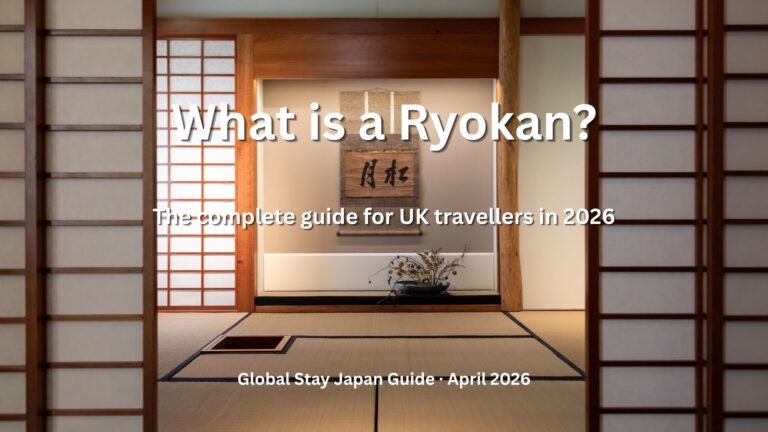
What Is a Ryokan — Complete Guide for UK Travellers
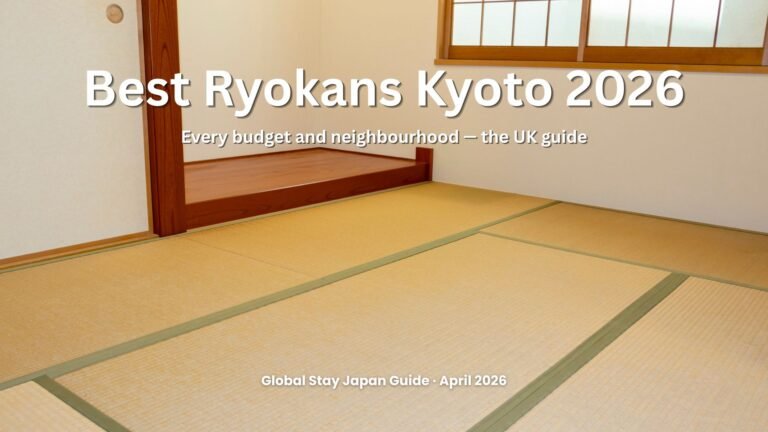
Best Ryokans in Kyoto 2026 — Prices, Locations, What to Expect
Hotels Near Haram Makkah 2026
Hotels in Madinah Near Masjid An-Nabawi 2026
Dubai Hotel Booking from UK 2026
Istanbul Hotel Booking from UK 2026
Hotel Booking UK — All Worldwide Destinations
Get a Personalised Hotel Quote — 24-Hour Response
✈️ Planning your Japan trip? Request a Japan hotel quote from GlobalStay — we check availability across Tokyo, Osaka, and Kyoto and come back with options within 24 hours. For groups of four rooms or more, we negotiate rates retail platforms cannot match.
Written by the GlobalStay Editorial Team. GlobalStay is a UK registered hotel booking service operated by Ya-Fatahoo Solutions Limited (Company No: 16175087), incorporated in England and Wales. We source hotels in Japan, Makkah, Madinah, Dubai, Istanbul, and worldwide destinations for UK travellers, families, and corporate clients. We are a hotel-only sourcing service and do not sell flight-inclusive packages.
Full Disclaimers
Hotel prices: All prices referenced in this guide are indicative only, based on publicly available listings researched in May 2026. Hotel rates are dynamic and subject to change at any time without notice. Prices shown do not constitute a confirmed booking or guaranteed rate. Always request a current quote for your specific dates.
Seasonal information: Japan rainy season dates, festival dates, and tourism patterns referenced in this guide are based on historical data and publicly available information as of May 2026. Conditions change year to year. Always check current conditions before travel.
Entry requirements: UK passport holders do not require a visa for Japan for stays of 90 days or fewer as of May 2026. Entry requirements are subject to change. Always verify current requirements with the UK Foreign, Commonwealth and Development Office before booking travel.
Hotel booking: GlobalStay is a hotel-only sourcing service operated by Ya-Fatahoo Solutions Limited. We are not an ATOL holder. For flight-inclusive packages, use an ATOL-protected operator.
FTC disclosure (US readers): This guide may contain affiliate links. GlobalStay may earn a commission if you click and book at no additional cost to you.
Does not constitute legal, financial, or travel safety advice. Last updated: May 2026.