Visiting Hokkaido Japan in Summer 2026 — Lavender, Hiking and Why It Beats Tokyo in July
Travel information in this guide is based on published research, tourism data, and verified sources as of August 2026. Hotel prices are indicative only, converted from JPY at approximately £1 = ¥212. Always verify current rates, transport schedules, and entry requirements before booking. Full disclaimers below ↓
Editorial note: This guide was produced by the GlobalStay editorial team to help UK families and international travellers plan a summer trip to Hokkaido. GlobalStay sources hotel accommodation across Hokkaido for UK travellers. Request a Hokkaido hotel quote here.
Loading…
Rates update automatically on every page load. Indicative mid-market rates only — always verify before booking.
Best time to visit: Mid-July to mid-August — lavender peak in Furano, summer festivals in Sapporo, hiking in Daisetsuzan.
Temperature: 22 to 27°C average — comfortably cool compared to Tokyo’s 33 to 38°C summer heat.
Top destinations: Furano (lavender), Biei (Blue Pond, flower hills), Sapporo (city base), Niseko (summer hiking), Shiretoko (wildlife, UNESCO).
Getting there from UK: Fly to Tokyo (Narita or Haneda), then domestic flight to Sapporo New Chitose Airport — approximately 90 minutes. Total journey from London approximately 15 to 17 hours.
Best hotel areas: Sapporo for a city base, Furano for immersive lavender experience, Niseko for outdoor adventure.
Book by: March 2027 for summer 2027. Furano hotels fill by May for July travel. Note: Hokkaido accommodation tax (¥100–¥500 per person per night) applies from April 2026 — payable at hotel check-in.
Most UK travellers who have been to Japan have been to Tokyo. Many have added Kyoto. A growing number have ventured to Osaka. Very few have made it to Hokkaido — and almost none in summer.
That is a genuine shame, because Hokkaido in July and August is arguably the best Japan experience available right now that the mainstream travel industry has not yet fully discovered. It is cooler, quieter, more spacious, and more visually surprising than anything in Honshu. While Tokyo bakes at 35°C and Kyoto’s streets swell with summer tourists, Hokkaido sits at 22 to 25°C with clean air, rolling lavender fields, volcanic national parks, and onsen ryokan that feel genuinely remote even when they are two hours from an international airport.
This guide covers Hokkaido summer properly — not just the lavender photographs you have already seen on Instagram, but the practical reality of planning and experiencing a summer trip to Japan’s northernmost island as a UK traveller.
Why Hokkaido summer is nothing like the rest of Japan
The first thing you notice when you land at New Chitose Airport and step outside is the air. It does not hit you with heat. It does not cling to you with humidity. It moves. Hokkaido sits at roughly the same latitude as the south of France, and in July and August, while the rest of Japan is submerged in the oppressive heat and humidity that makes summer travel on Honshu genuinely exhausting, Hokkaido operates at temperatures that feel familiar to UK visitors — warm, bright days, cool evenings, manageable.
This is not a minor difference. For UK families who find Japanese summer heat overwhelming — or who have elderly family members or young children who struggle in heat — Hokkaido is the answer that nobody tells you about. You get Japan in summer without the climate penalty that makes Kyoto in August feel like a punishment.
The second thing you notice is the scale. Hokkaido is 83,000 square kilometres — slightly larger than Austria. It contains approximately 22% of Japan’s land area but only 4% of its population. The landscape opens up in ways that feel genuinely unlike anything else in Japan — wide agricultural plains, mountain ranges that go all the way to the horizon, coastlines that see almost no tourism outside specialist nature travellers. After the compressed urban density of Tokyo or Kyoto, Hokkaido feels like taking a deep breath.
Furano — the lavender experience that actually lives up to its photographs
Furano’s lavender fields are legitimately one of the most beautiful landscapes you will see anywhere in the world in July. The photographs circulating on social media are real — rolling purple fields against the backdrop of the Tokachi mountain range, the air genuinely scented with lavender for hundreds of metres around the main farms. Farm Tomita — the farm that put Furano’s lavender on the map — has been cultivating lavender since the 1930s and covers enough ground that even on a busy July weekend, you can find a quiet section of field to stand in and just look.
The lavender blooms from late June, reaches peak from mid-July to early August, and starts its harvest decline from mid-August. If you can travel in the third week of July, you will hit the absolute peak — all four varieties of Furano lavender in full colour simultaneously, the distillation factory running, the lavender ice cream queue worth standing in, and the evening light over the mountains turning the whole valley into something that requires no filter and no editing to look extraordinary.
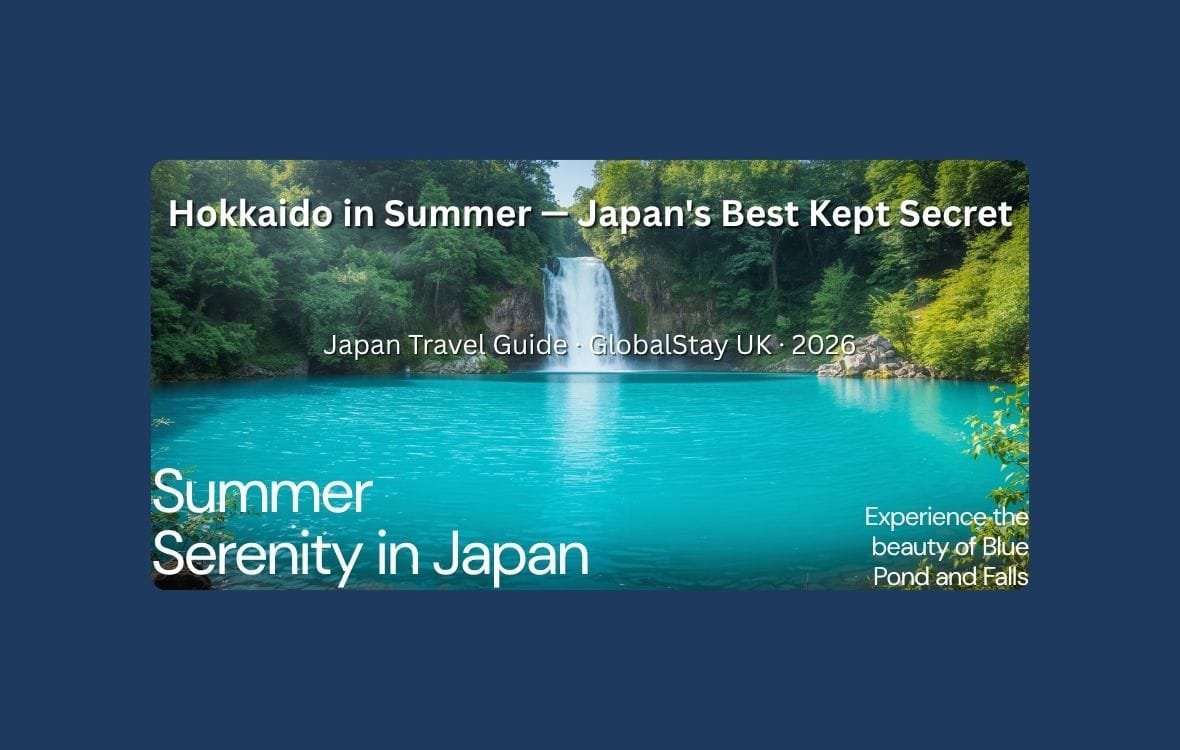
Beyond lavender, Furano in summer has flower fields of lupin, sunflowers, cosmos, and poppies that follow each other through the season. Nearby Biei — 30 minutes north by car — has the famous Blue Pond (Aoiike), whose turquoise colour from naturally occurring aluminium hydroxide looks genuinely impossible until you are standing in front of it. Shirahige Waterfall, 10 minutes from the Blue Pond, spills bright blue water through a volcanic rock face. Shikisai-no-Oka flower park in Biei spreads across rolling hills with seasonal blooms so densely planted they look like someone threw a box of felt-tip pens at a model landscape.
How long to spend in Furano and Biei? Three nights minimum to do it properly. Two nights if you are tight on time. One night feels rushed — you spend the first afternoon adjusting and only hit your stride on day two. The Shin Furano Prince Hotel sits directly in front of Mount Tokachi with views of the Furano basin from the rooms — it is the most coveted Furano accommodation for good reason, and it books out from May for July travel. Book it early or accept a more modest alternative in town.
Sapporo — the city that does summer better than it advertises
Sapporo is the capital of Hokkaido and most travellers treat it purely as a transit hub — land at New Chitose, spend one night, then head to Furano or Niseko. That undersells it significantly.
Odori Park — a long green strip running through central Sapporo — runs summer beer garden events from July to August where every major Japanese brewery sets up an outdoor tent bar. On a warm Sapporo evening with a cold Sapporo Classic beer (brewed locally and not exported — you can only drink it here) in hand and the city’s wide European-planned avenues stretching away in every direction, it is one of the most pleasant urban experiences Japan offers in summer.
Sapporo’s clock tower, the Former Hokkaido Government Building (nicknamed the Red Brick), and the hilltop Hokkaido Shrine are all within easy walking distance of each other and worth an unhurried half-day. The Nijo Fish Market two blocks from the main station sells Hokkaido seafood — king crab, sea urchin (uni), and salmon roe — at prices significantly below what you would pay in Tokyo for the same quality. A bowl of uni-don (sea urchin rice bowl) in Nijo Market is one of the definitive Japan food experiences, and Hokkaido’s uni is the best in the country.
Two nights in Sapporo is enough for a first visit. Stay at the JR Tower Hotel Nikko Sapporo — directly connected to the station, excellent service, views of the city from upper floors — or the Dormy Inn Premium Sapporo for a more affordable option with onsen on the upper floor.
Daisetsuzan National Park — hiking Japan’s wilderness
Daisetsuzan is Japan’s largest national park — 2,267 square kilometres of volcanic mountains, alpine flower meadows, and gorges in central Hokkaido. In summer, the park’s higher elevations host alpine flowers — from late June through August, the slopes above 1,500 metres carry blooms that would be highlights of any Scottish Highland walk. The highest drivable point in Hokkaido is accessible here, with easy viewpoint trails for families and longer alpine routes for more committed hikers.
Sounkyo Gorge — the park’s most dramatic accessible landscape — is a 24-kilometre basalt gorge with two major waterfalls: Ryusei (Shooting Star Falls) and Ginga (Milky Way Falls). A ropeway and chair lift take visitors to the higher slopes for views across the gorge and the Daisetsuzan peaks. The gorge town has a small cluster of onsen hotels where an evening in the baths with the gorge visible through the windows is exactly the Hokkaido experience that justifies the journey from the UK.
Niseko in summer — what happens when a ski resort takes its coat off
Niseko is known globally as Japan’s premier powder ski destination. What fewer international visitors know is that Niseko in summer is a genuinely different but equally worthwhile experience. The gondolas and chairlifts that ferry skiers in winter run hikers and mountain bikers in summer to viewpoints overlooking Mount Yotei — the near-perfect volcanic cone that dominates the Niseko landscape and is nicknamed Ezo Fuji for its resemblance to Mount Fuji.
Rafting on the Shiribeshi-Toshibetsu River, mountain biking through birch forests, golf on courses with Yotei views, and evening onsen in ryokan that have been serving winter skiers for decades but have entirely different summer energy — Niseko in July and August is outdoor activity at its best, with the infrastructure of a well-developed resort and the landscape of somewhere that feels genuinely wild.
Grand Hirafu — Niseko’s main village — has restaurant and café options that reflect the resort’s international ski clientele. Australian and New Zealand visitors make up a significant proportion of Niseko’s winter guests and have influenced the food scene — good coffee, which is not universal in rural Japan, is available here.
Shiretoko Peninsula — Japan’s most remote corner
Shiretoko is a UNESCO World Heritage Site at the northeastern tip of Hokkaido — one of the least visited accessible UNESCO sites in Japan. The peninsula juts into the Sea of Okhotsk with a volcanic mountain spine and coastline accessible only by boat for much of its length. Brown bears — Hokkaido’s apex predator — are a genuine wildlife sighting possibility here, and the Shiretoko Five Lakes trail is one of the most rewarding easy walks in Japan: five turquoise lakes connected by an elevated boardwalk with bears, deer, and raptors visible if you are quiet and attentive.
Shiretoko is a long way from New Chitose — five to six hours by road or a combination of train and bus. It works best as a two or three-night destination on its own, built into a wider Hokkaido itinerary rather than a day trip from Sapporo. The small coastal towns of Utoro and Rausu have onsen hotels right on the seafront with bear-sighting boat tours departing in the morning.
Hokkaido summer hotels — where to stay and what to pay
Hotel prices in Hokkaido in summer are meaningfully lower than in Tokyo or Kyoto during the same period. The weak yen makes them exceptional value for UK visitors at 2026 exchange rates.
Sapporo: Business hotels from approximately £27 to £62 per room per night. JR Tower Hotel Nikko Sapporo (4-star, directly above the station) from approximately £168. Dormy Inn Premium Sapporo (mid-range, onsen) from approximately £89.
Furano: Shin Furano Prince Hotel (the mountain view property) from approximately £116 to £145 per room per night depending on season and room type. Town hotels from approximately £49. Ryokan with dinner and breakfast included from approximately £94 per person.
Niseko: Summer rates at the major resort properties run 30 to 50% below winter ski season prices. Mid-range properties from approximately £78 to £98 per room. Luxury chalets and resort properties from approximately £213+.
Daisetsuzan / Sounkyo: Onsen hotels in Sounkyo Gorge from approximately £71 to £119 per person including dinner and breakfast — the meal-included onsen hotel is the standard format here and worth paying for.
All Hokkaido summer hotels benefit from the yen’s current weakness against the pound. A mid-range Furano ryokan including two meals — dinner and breakfast — at approximately £94 per person per night delivers an experience that would cost three times as much in rural Scotland or the Lake District for comparable quality.
Compare flights from London, Manchester, Birmingham and other UK airports to Tokyo, Osaka, and Sapporo. Enter your dates to find the best price.
Prices are indicative and update in real time. Always verify before booking. GlobalStay may earn a commission if you book via this widget.
Private transfer from Tokyo Narita, Haneda, Osaka Kansai, or any Japan airport directly to your hotel. Fixed price, meet and greet, no hidden charges.
Transfer prices vary by vehicle type and group size. Always verify before booking. GlobalStay may earn a commission if you book via this widget.
Getting around Hokkaido — the honest transport guide
Hokkaido’s public transport outside Sapporo is significantly more limited than the rest of Japan. The JR train network covers the main routes but Furano and Biei are served by slow local trains — the journey from Sapporo to Furano takes approximately two hours by direct express. Within Furano and Biei, farms and attractions are spread across a large rural area that is genuinely difficult to navigate without a car.
The honest advice: rent a car for the Furano and Biei section of your Hokkaido trip. UK drivers can drive in Japan on an International Driving Permit (obtainable from the AA or RAC before departure) for up to 12 months. Japan drives on the left — the same as the UK — making the adjustment minimal. Hokkaido’s roads are wide, well-maintained, and the signage is increasingly bilingual. A rental car from Asahikawa Airport or Furano Station unlocks the full Furano and Biei experience in a way that bus tours and taxis do not.
For Sapporo itself, the subway system covers the main tourist areas efficiently and is straightforward to navigate with an IC card.
Important Japan 2026 updates for Hokkaido visitors
Several significant changes to Japan’s tourism regulations came into effect in 2026. UK, US, Australian, and Canadian visitors planning a Hokkaido summer trip need to factor these into their budget and planning.
Hokkaido accommodation tax (from April 2026): Hokkaido introduced a prefectural lodging tax from 1 April 2026 — charged per person per night at check-in, not at booking time. Rates: ¥100 (approximately £0.50) for rooms under ¥20,000 per person per night; ¥200 (approximately £1) for rooms between ¥20,000 and ¥49,999; and ¥500 (approximately £2.50) for rooms ¥50,000 and above. Additionally Furano City charges its own municipal accommodation tax separately — ¥300 per person for rooms under ¥20,000, ¥500 for ¥20,000–¥49,999, ¥1,000 for ¥50,000 and above. This means visitors at Shin Furano Prince Hotel may pay both prefectural and city tax at check-in. Confirm the total tax with your hotel before arrival.
Japan departure tax tripled (from 1 July 2026): The international departure tax increased from ¥1,000 to ¥3,000 per person from 1 July 2026 — automatically included in your outbound flight ticket. Budget an additional £7 per person each way compared to 2025 travel.
Tax-free shopping changes (from November 2026): Japan’s tax-free shopping system changes from 1 November 2026. Instead of receiving the consumption tax discount at point of purchase, visitors pay the full price in store and claim a refund at the airport on departure after customs inspection. Allow at least 45 minutes extra airport time if you have made purchases during your Hokkaido trip.
JR fares and oversized luggage (spring 2026): JR East raised base fares and limited express surcharges in spring 2026. Oversized luggage on Shinkansen now requires a reservation at ticket purchase — failure to reserve results in a ¥1,000 surcharge at boarding. This is particularly relevant for Hokkaido visitors flying into New Chitose and taking the Shinkansen from Tokyo for a combined Honshu and Hokkaido trip.
Visa-free entry unchanged: UK, US, Australian, Canadian, and New Zealand passport holders enter Japan visa-free for stays up to 90 days. The JESTA electronic travel authorisation system does not launch until 2029 — no action required for 2026 or 2027 travel.
Hokkaido for UK families in summer — the practical case
Hokkaido in July and August is one of the most family-friendly Japan destinations available. The temperature is manageable for children without the heat exhaustion risk of Honshu summer. The outdoor activities — lavender farm visits, flower field cycling, gentle hiking, bear-watching boat tours, onsen — engage children across all ages. The food — Hokkaido dairy products, lavender ice cream, fresh seafood, corn, melon — is genuinely exciting for children rather than requiring the adaptation that some Japanese regional food demands. And the pace is slower and more spacious than Tokyo or Kyoto, which matters when you are managing young children’s energy across a long trip.
Hokkaido is also where Japan’s best dairy products come from — the milk, cheese, butter, and soft-serve ice cream produced here are in a different category from the rest of Japan. Farm Tomita’s lavender soft-serve is the most photographed food in Furano for good reason. The Hokkaido dairy products available at every farm shop and roadside stall are a genuine food travel highlight.
Get a Japan eSIM before you travel. No SIM card swap or airport queue needed — activate on your phone before departure. Essential for Google Maps navigation on Japan’s train network.
eSIM prices vary by data plan and duration. Always verify compatibility with your device before purchasing. GlobalStay may earn a commission if you purchase via this widget.
Hokkaido Ryokan Guide 2026 — Private Onsen and Winter Snow Season
Japan Summer Holidays from UK 2026 — Hotels and Planning Guide
Tokyo Hotels 2026 — Complete International Traveller Guide
Tokyo Hotel Prices 2026 — GBP, USD and AUD Guide
Osaka Hotels Cherry Blossom March 2027 — Family Guide
Kyoto Hotels UK 2026 — Best Areas and Where to Stay
Get a Personalised Hokkaido Hotel Quote — 24-Hour Response
🌸 Planning a Hokkaido summer trip? Request a hotel quote from GlobalStay — tell us your dates, which areas you want to cover (Sapporo, Furano, Niseko, Daisetsuzan, Shiretoko), group size, and budget. We source the full Hokkaido hotel itinerary and respond within 24 hours.
Written by the GlobalStay Editorial Team. GlobalStay is a UK registered hotel booking service operated by Ya-Fatahoo Solutions Limited (Company No: 16175087), incorporated in England and Wales. We source hotels across Hokkaido, Tokyo, Kyoto, Osaka, and worldwide destinations for UK travellers and international visitors. Hotel-only service — we do not sell flights or package holidays.
Pricing accuracy: All hotel prices are indicative only, based on published market data and verified listings updated August 2026. Converted from JPY at approximately £1 = ¥212. Exchange rates fluctuate daily. Always verify current rates before booking.
Lavender bloom dates: Hokkaido lavender typically peaks mid-July to early August. Exact dates vary year to year based on weather conditions. Always check current bloom reports before travel specifically timed for lavender.
Wildlife sightings: Brown bear sightings in Shiretoko are possible but not guaranteed. Always follow park guidelines and use authorised guided tours for Shiretoko wildlife areas.
Driving in Japan: UK visitors require an International Driving Permit alongside their UK driving licence to drive in Japan. Obtain from the AA or RAC before departure. Japan has strict drink-driving laws — zero tolerance.
Entry requirements: UK passport holders enter Japan visa-free for stays of up to 90 days as of August 2026. JESTA electronic travel authorisation does not launch until 2029 — no action required for 2026 travel.
Hotel booking: GlobalStay is a hotel-only sourcing service. Not an ATOL holder.
FTC disclosure: This guide may contain affiliate links. GlobalStay may earn a commission at no additional cost to you.
Does not constitute legal, financial, or travel safety advice. Last updated: August 2026.